

Standard Chartered launched tokenized deposits in Hong Kong last week, the first market in the Group, and its corporate clients can now move commercial bank money between participating banks 24/7, settled in central bank money. Developed with support from the HKMA’s Supervisory Incubator for Distributed Ledger Technology (DLT) and powered by EnsembleTX infrastructure the solution is designed to enhance efficiency, interoperability and predictability, while reducing counterparty risk as value moves between financial institutions.
Standard Chartered named Fireblocks as one of its ecosystem partners, and we’re working with the bank on how those capabilities could reach the digital asset businesses already running on our platform.
Standard Chartered’s tokenized deposits run on a single permissioned rail across the bank’s own network, but that rail was built to connect from day one. It’s already interbank. The Group operates across 55 markets in Asia, Africa and the Middle East, the corridors where stablecoins and digital money already do real work, and SC Ventures has spent years backing digital asset infrastructure through Zodia Markets and Libeara, alongside a number of our other clients.
Stablecoins sit at the other end, open and permissionless, anyone can hold them and anyone can move them. If we want to win the payments race, everyone needs to be attached to the same network of tracks, bank money, tokenized deposits and stablecoins, with a neutral connector between them. That’s what the Fireblocks Network already does across more than 200 blockchain networks, and 2,500 institutional clients.
We’ve Run a Version of This Before
From 2019 to early 2023, the digital asset market moved its dollars through a couple of bank networks that offered real-time, 24/7 transfers between clients of the same bank. Demand was never the issue, the larger of the two moved $787 billion in 2021, up from $33 billion two years earlier, across roughly 1,400 institutions, and by late 2021 the pair was moving north of $400 billion a quarter between them.
The issue was the closed loop. Value only moved instantly if both sides banked in the same place, so liquidity pooled in one or two balance sheets, and when those balance sheets went in March 2023, the rail went with them. Trading firms, exchanges and payment companies spent the next two years rebuilding dollar connectivity bank by bank, and a lot of that flow moved to stablecoins instead. Stablecoins are now the dominant asset on our platform, with clients moving $3.7 trillion through Fireblocks in the twelve months to September 2026. What Standard Chartered launched last week starts from a different place, its tokenized deposits move between participating banks through the HKMA’s EnsembleTX, settled in central bank money around the clock, and early clients are already using them to settle tokenized money market funds.
The next phase of tokenization will be less about individual solutions and more about how such solutions operate within the broader ecosystem that is being built. Our focus is on connecting tokenized deposits with other forms of money, assets and financial infrastructure, and orchestrating those components so value can move more effectively across the system. That is how tokenization addresses real-world client needs and becomes ready to be used by corporates today.
Mark Willis
Managing Director, Global Head of Emerging Payments
The Rail Needs Liquidity
Moving value 24/7 is the easy part, the hard part is having the other currency waiting when you get there. A remittance using stablecoins is essentially two FX trades with a transfer in the middle, and most of the world’s FX liquidity still sits with banks, off-chain.
The gap is wide. Even the deepest stablecoin FX pair, dollar stablecoins against the euro, trades only about $200 million a day on public exchanges. The euro FX market trades trillions.
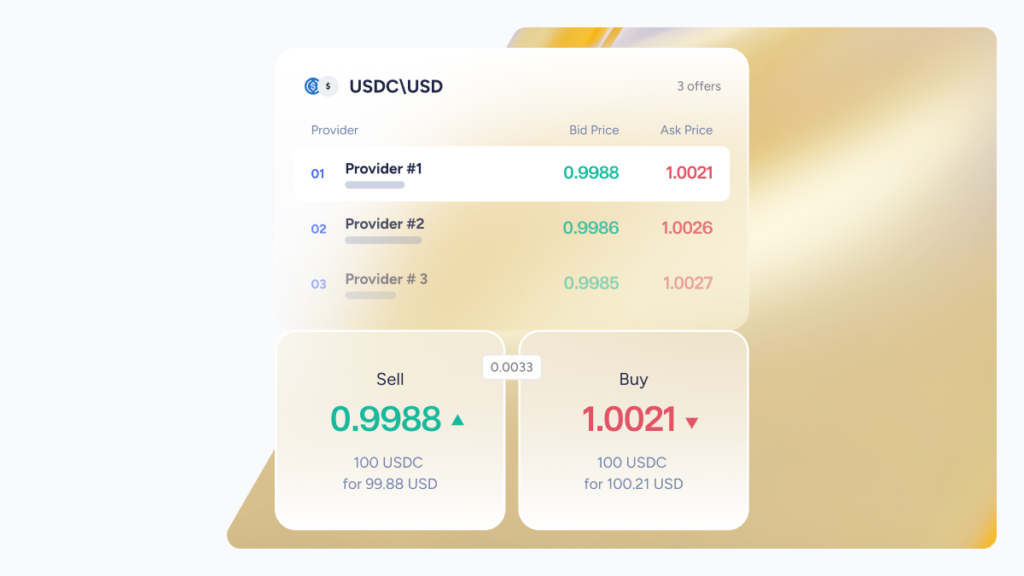
Outside a handful of currencies, on-exchange stablecoin volume against local fiat is a few million dollars a day. OTC desks fill a lot of that gap, they’re scaling fast and Liquidity Market now connects the suppliers of liquidity directly to the consumers. As more payment flow moves onto blockchains, it needs deeper wholesale liquidity behind it at the scale banks already run off-chain. That’s where tokenized deposits and bank on- and off-ramps come in, bringing regulated balance sheets and FX liquidity onto the same rails.
That’s a question I’ve taken to our Customer Advisory Board this week at SPARK, our annual client conference.
Where Fireblocks Fits
A tokenized deposit is only as useful as what it connects to. More than 300 payment companies run on Fireblocks, and payments is the fastest-growing segment of OTC desk flow on the platform, up 110% year over year. In the twelve months to June 2026, more than $150 billion and nearly 11 million transactions moved on weekends, outside bank settlement hours. Most payment companies hold stablecoins in Fireblocks and bank their fiat somewhere else, so every on- and off-ramp means moving between two systems.
The Fireblocks Network for Payments already connects them to on- and off-ramp providers and liquidity desks. Putting bank money itself into that same workflow, under the same policy engine and approvals, is what we’re exploring with Standard Chartered. The Fireblocks Network stays neutral throughout. It never takes the other side of a trade, never sits in the flow of funds, and never takes possession of client assets. That neutrality is why a bank can connect to the Network and its clients can trust it. No single rail wins this, the network that connects them does. We’re looking forward to working through it with Standard Chartered and our clients in 2027.
To hear more about what comes next, join Mark Willis of Standard Chartered and Tim Way of Fireblocks at Singapore FinTech Festival on Thursday, November 19, at 2:30pm SGT on the Ignite Stage (Hall 5). Their fireside chat, “Putting Bank Deposits to Work Onchain,” follows Standard Chartered’s tokenized deposits launch at Hong Kong FinTech Week.
Get a personalized demo
See how Fireblocks helps your digital asset business to grow fast and stay secure